Cyndy Thooi

New technologies to boost health, farming and food security

New technologies to boost health, farming and food security

UK bioscience is set to benefit from cutting-edge research tools accelerating advances in health, climate-smart farming, sustainable food and drug discovery.

Thirty-one new technology awards will equip scientists with the infrastructure they need to answer some of the most pressing challenges in biology and beyond.

These include imaging tools that reveal how cells behave in real time, to a mobile platform that tracks carbon movement on farms.

The awards are funded by the Biotechnology and Biological Sciences Research Council (BBSRC) to the tune of £27 million.

World class-infrastructure

They have been made under BBSRC’s ALERT scheme, which is designed to ensure UK bioscience researchers have access to the latest mid-range equipment and technical expertise.

This ranges from funding upgrades and ‘workhorse’ equipment to cutting-edge technologies and lab-to-field platforms.

Dr Amanda Collis, Executive Director for Research Strategy and Programmes at BBSRC, said:

This funding strengthens the UK’s bioscience capability by investing in advanced research equipment, enabling transformative science and fostering collaboration. In doing this, we are supporting world-class infrastructure that drives discovery and innovation essential to deliver real-world impacts and transform lives.

Tackling urgent real-world challenges

The technologies funded through ALERT will enable transformative outcomes.

Unlocking new approaches to tissue regeneration

A dedicated axolotl research facility at the University of Edinburgh, the only one in the UK, will help researchers investigate how these rare amphibians regenerate limbs, spinal cords and organs.

This could lead to long-term breakthroughs in how we treat injuries and degenerative diseases.

Supporting sustainable agriculture and net zero

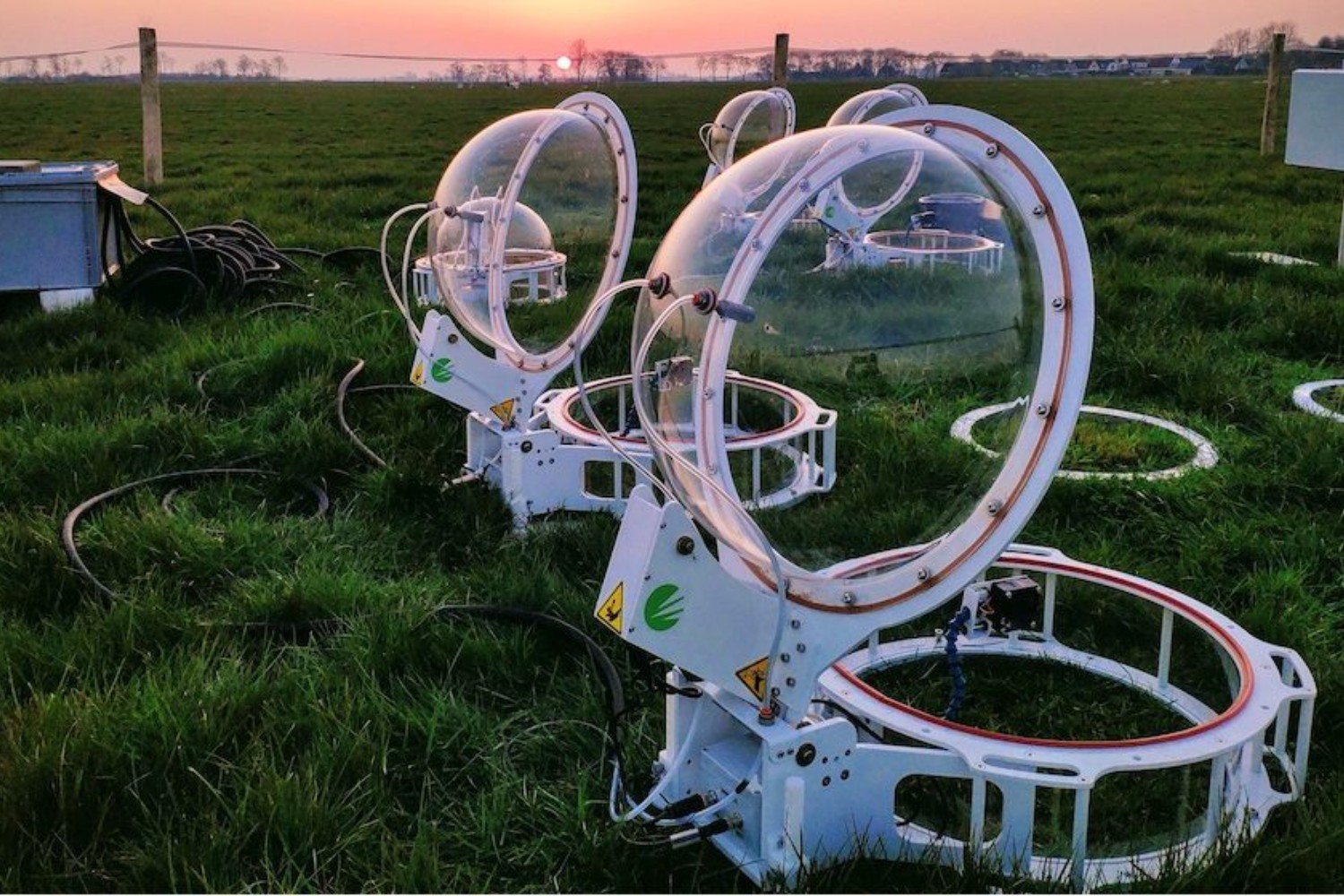
A mobile carbon flux tracking platform at Lancaster University will help researchers measure how carbon moves through UK farmland.

This will provide critical data for improving soil health, land use policy and climate-smart farming practices.

Exploring brain function across the lifespan

The University of Birmingham will establish a wearable brain-imaging platform to track neural activity from infancy to old age in real-world settings.

By leveraging an emerging quantum technology to overcome the limitations of existing brain imaging methods, this breakthrough could transform our understanding of brain development, social interaction, education and future healthcare.

Improving human health and resilience

New high-resolution imaging systems and advanced analytical tools across the UK will enhance our understanding of fundamental biology and immune responses to help tackle cancer, neurological and infectious disease and antimicrobial resistance.

Boosting food security and nutrition

Upgraded nuclear magnetic resonance (NMR) spectroscopy and genomics platforms will support research into crop development, food digestion and the design of future foods with targeted health benefits.

Building capacity across the UK

The ALERT programme supports the wider bioscience ecosystem, with nine of the funded projects being led by research technical professionals.

These roles are critical in ensuring complex research infrastructure is expertly maintained, operated and embedded into UK research environments.

ALERT in action

Launched in 2013, ALERT has supported more than 300 awards across the UK, providing the bioscience community with access to essential equipment that drives innovation and delivers research with impact.

Weather in the lab

A new £1.5 million Global Meteorological Simulator has been launched at the University of Exeter, creating a groundbreaking way to ‘bring the weather into the lab’.

This state-of-the-art facility can replicate wind, rain, mist and future climate scenarios, enabling researchers to study how crops and pollinators respond to changing conditions.

Early projects include investigating how rice diseases spread in tropical climates and how bees adapt to abrupt weather changes.

Funded by BBSRC’s ALERT 2022 scheme, with additional support from the University of Exeter, the simulator is one of only a few in the world capable of combining multiple weather variables simultaneously.

By enabling experiments that would be impossible in the field, it provides scientists with a powerful tool to tackle urgent challenges in food security, crop resilience and pollination under climate change.

Skin-swab breakthrough for Parkinson’s

A breakthrough in Parkinson’s disease diagnosis is emerging from The University of Manchester, powered by BBSRC ALERT funding awarded in 2014.

Researchers have developed a simple skin-swab test that can identify Parkinson’s far earlier and more accurately than current methods.

The funding enabled the purchase of cutting-edge mass spectrometry equipment, allowing researchers to analyse chemical changes in sebum, the oily substance produced by skin.

Using high-resolution mass spectrometry, the team uncovered unique molecular signatures linked to Parkinson’s, creating a new diagnostic pathway.

The impact to date has been significant:

  • the research has moved from fundamental science to a diagnostic tool now being trialled in NHS clinics
  • it demonstrates how BBSRC-funded infrastructure enables discovery research that can translate into health innovation
  • The University of Manchester is collaborating with healthcare partners to bring the test into routine practice, with the potential to transform lives and livelihoods through early diagnosis for thousands of patients

Miniature models, major breakthroughs

In 2022, BBSRC’s ALERT funding enabled the Royal Veterinary College to launch a pioneering organ-on-a-chip facility, now central to their new Centre for Vaccinology and Regenerative Medicine.

This cutting-edge microfluidic technology replicates animal tissue environments, such as barriers and organs, within miniature chips to model how diseases, vaccines and therapies interact in realistic physiological contexts.

The facility supports research on host-pathogen interactions, vaccine development and regenerative medicine.

Further, it significantly reduces reliance on live animal testing, advancing both scientific understanding and the 3Rs principles (replacement, reduction and refinement).

BlueCryo powers COVID discovery

In 2017, BBSRC’s ALERT scheme provided critical support to establish BlueCryo, a high-performance computing cluster at the University of Bristol dedicated to cryo-EM image processing.

This advanced infrastructure significantly accelerated 3D structural biology analysis across multiple research domains.

The real-world impact of this investment became clear in March 2020, during the COVID-19 pandemic, when Bristol researchers leveraged cryo-EM supported by BlueCryo to unravel the structure of the SARS-CoV-2 spike glycoprotein.

This breakthrough revealed a conserved fatty acid binding pocket across deadly coronaviruses, including SARS-CoV, MERS and Omicron strains.

The discovery is now informing the development of pan-coronavirus antivirals, offering therapeutics that could address both current and future outbreaks.

BlueCryo demonstrates how strategic infrastructure funding can enable rapid, globally relevant scientific advances.

Full article here

Posted by Cyndy Thooi in Uncategorised
Learning the Language of Bacterial Genomes with a Contextualised Protein Language Model

Learning the Language of Bacterial Genomes with a Contextualised Protein Language Model

Biosciences Seminar Speaker: Maciek Wiatrak, Cambridge University

Place: 305, Bedford Way (26)

Date: 02/10/2025
Time: 11.00-12.00

Bacteria have evolved a vast diversity of functions and behaviours which are currently incompletely understood and poorly predicted from DNA sequence alone. To understand the syntax of bacterial evolution and discover genome-to-phenotype relationships, we curated over 1.3 million genomes spanning bacterial phylogenetic space, representing each as an ordered sequence of proteins which collectively were used to train a transformer-based, contextualised protein language model, Bacformer. By pretraining the model to learn genome-wide evolutionary patterns, Bacformer captures the compositional and positional relationships of proteins and can accurately: predict protein-protein interactions, operon structure (which we validated experimentally), and protein function; infer phenotypic traits and identify likely causal genes; and design template synthethic genomes with desired properties. Thus, Bacformer represents a new foundation model for bacterial genomics that provide biological insights and a framework for prediction, inference, and generative tasks.


Posted by Cyndy Thooi in Uncategorised
Bernal Lecture 2025 to explore the radical legacy of Alan Mackay

Bernal Lecture 2025 to explore the radical legacy of Alan Mackay

Birkbeck’s annual Bernal lecture honours the pioneering spirit of JD Bernal, and this year shines a light on one of his most remarkable protégés.

The 2025 Bernal Lecture will be held under the title “The Harvest of an Eclectic Mind: Alan Mackay and the Rewriting of the Book of Crystallography.” The lecture celebrates the life and work of Alan Mackay, an independent thinker whose bold ideas helped reshape modern crystallography.

Mackay, who joined JD Bernal’s lab at Birkbeck more than 75 years ago, was known for questioning scientific conventions and pushing the boundaries of structural science. His  research on quasicrystals – structures that challenged accepted theories of symmetry and crystallography – later became the basis for a Nobel Prize-winning discovery.

The 2025 lecture will be delivered by Professor John Finney, a former Birkbeck student and close colleague of both Bernal and Mackay. Drawing on personal experience, Professor Finney will explore the unique intellectual environment of Bernal’s laboratory, a space where collaboration, curiosity and radical ideas thrived.

Established in 1968, the Bernal Lecture commemorates JD Bernal (1901–1971), former Professor of Physics and Chair of Crystallography at Birkbeck. A pioneer in X-ray crystallography, Bernal was also known for his interest in the social impact of science and his leadership during the Second World War. His legacy lives on through this annual event, which returned in 2024 after a pandemic-related pause.

Katherine Thompson, from Birkbeck’s Faculty of Science commented:

“Scientific research for the benefit of society is at the heart of Birkbeck, and the Bernal Lecture is always a highlight of our year. This time it is especially meaningful, as we commemorate the life, ideas, and legacy of two remarkable scientists: JD Bernal and Alan Mackay. The lecture will be delivered by John Finney, a former Birkbeck PhD student who knew and worked with both men. John went on to serve as Chief Scientist at the national neutron facility ISIS before becoming Quain Professor of Physics at UCL. We look forward to what promises to be a fascinating and thought-provoking evening.”

The lecture will be taking place on 23 September, 16:00 – 19:00, at Birkbeck Clore Management Centre. The event is open to the public, with all encouraged to attend.

Further Information

Posted by Cyndy Thooi in Uncategorised
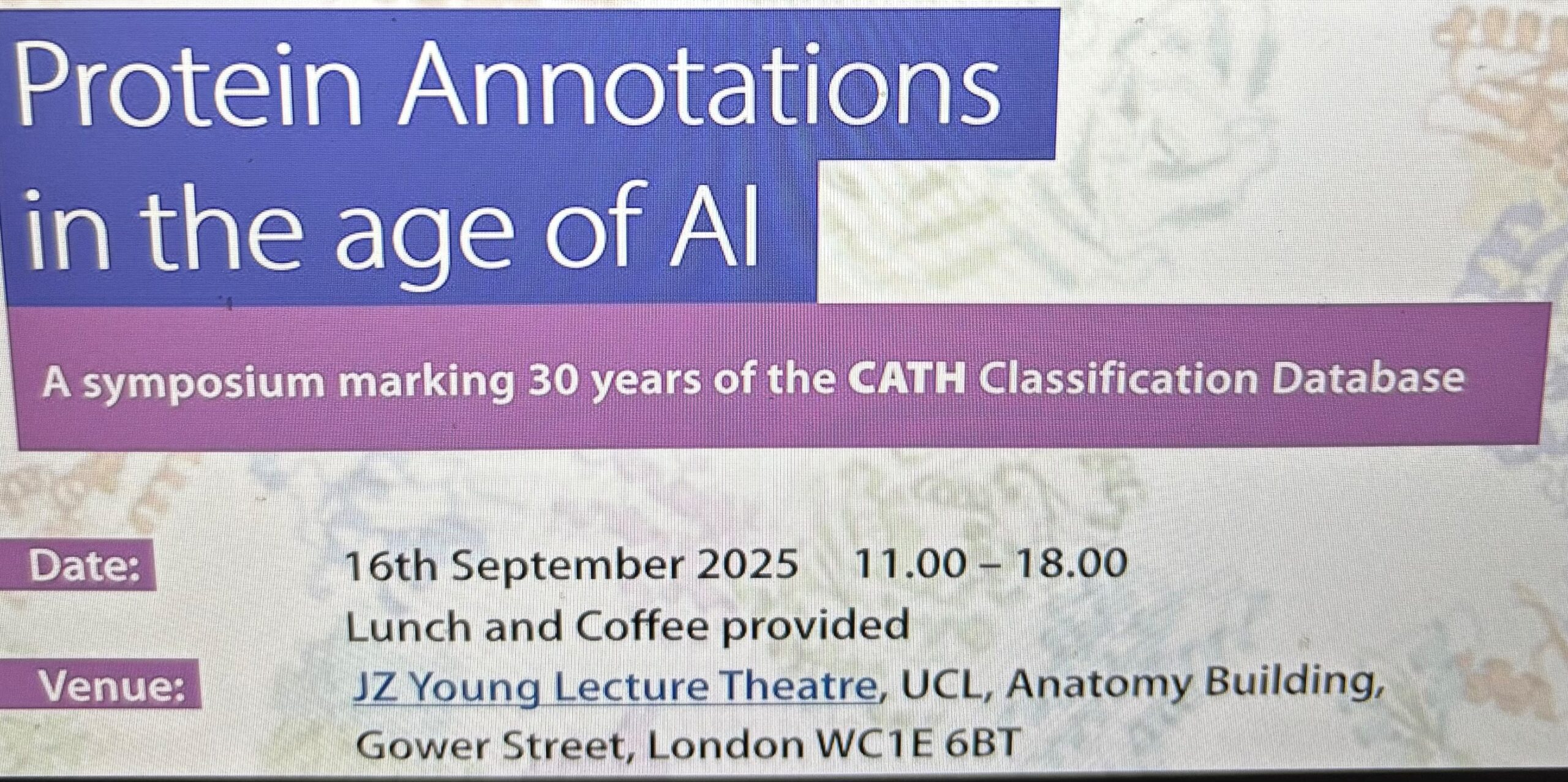
Protein Annotations in the age of AI

Protein Annotations in the age of AI

A not-for-profit symposium highlighting recent AI-based developments to enhance protein family classifications, annotations and analyses. There will be talks from world leaders in structural bioinfomatics on various themes including pioneering protein language models and key international resources including: PDBe, InterPro, UniProt, MGnify, SWISS-MODEL, FrustraEvo and CATH.

Invited Speakers:

  • Christine Orengo — University College London
  • Burkhard Rost — Technical University, Munich, Germany
  • Janet Thornton — European Bioinfomatics Institute, Cambridge
  • David Jones — University College London
  • Gonzalo Parra — Barcelona Supercomputer Centre, Spain
  • Sameer Velankar — European Bioinfomatics Institute, Cambridge
  • Alex Bateman — European Bioinfomatics Institute, Cambridge
  • Maria Martin — European Bioinfomatics Institute, Cambridge
  • Rob Finn — European Bioinfomatics Institute, Cambridge
  • Gerardo Tauriello — Biozentrum, Basle, Switzerland
  • Alexey Murzin — Laboratory of Molecular Biology, Cambridge

If you wish to showcase your research with a poster presentation, please submit a 300-words or less abstract (including references) to Dr. Vaishali Waman at v.waman@ucl.ac.uk before 1st September.

Note: the £10 charge for tickets contributes towards the cost of 2 coffee breaks and lunch.

Posted by Cyndy Thooi in Uncategorised
Swiss Government Excellence Scholarships 2026/27 for British researchers

Swiss Government Excellence Scholarships 2026/27 for British researchers

The Swiss government offers fellowships for British researchers to undertake a research project in Switzerland.

Switzerland has some of the world’s top universities and research institutes © Switzerland Tourism / Lorenz Richard The Swiss Government Excellence Scholarships give early-stage British researchers (Master’s degree or recent PhD) the opportunity to pursue a research project at postgraduate, doctoral or postdoctoral level at any of Switzerland’s universities or national research institutes. Applicants need to propose a research project that is supported by an academic supervisor at their institution of choice. Maximum duration is 12 months for research projects and 36 months for pursuing a PhD. The application deadline for Scholarships commencing in September 2026 is 5 December 2025.

Details and application guidelines.

For further information please contact Dr Lutz-Peter Berg (lutz-peter.berg@eda.admin.ch) at the Embassy of Switzerland in London.

Posted by Cyndy Thooi in Uncategorised

Engineering plants and algae into next-generation crops

Potato farmA new project led by UCL seeks to develop the plants and food of the future, supported by UK government funding from the Advanced Research and Invention Agency (ARIA).

Professor Saul Purton (UCL Structural & Molecular Biology) and Dr Scott Lenaghan (University of Tennessee) are co-leading a project, supported by an £8.9 million grant, that aims to harness the power of organisms that capture energy from sunlight (photosynthesis) – both land plants and algae – for the sustainable, affordable, and accessible production of valuable compounds for healthcare and manufacturing.


Read the full article here.

Posted by Cyndy Thooi in Uncategorised

TwinsUK: a study of health and ageing from cells to society

TwinsUK is the UK’s largest study of adult twins who have contributed their health data over up to 30 years. Claire Steves, together with twins involved in the studies – Yvonne Haines and Sandra Coles, will talk about how this collaboration between scientists and participants has contributed to understanding of how we can stay healthy as we age.

Posted by Cyndy Thooi in Uncategorised

Franca Fraternali is Professor in Integrative Computational Biology and newly appointed Director of ISMB


ISMB Director f.fraternali@ucl.ac.uk

Based at UCL and Birkbeck


Professor Franca Fraternali is an expert in Structural Bioinformatics and Computational Biophysics. She received her PhD in Chemistry from the University of Naples, having spent part of her doctorate at the Physical Chemistry Department of the ETH Zürich (ETHZ). She was awarded an EMBO fellowship to work at the ETHZ, followed by positions at the University of Strasbourg and EMBL Heidelberg. She moved to England as staff scientist at the Mathematical Biology Division of the MRC National Institute for Medical Research. In 2012 she became Professor of Bioinformatics and Computational Biology in the Randall Centre for Cell and Molecular Biology. From 2016 has been involved in the coordination of activities for the partnership with the Francis Crick Institute and has held an attachment position in the Institute. Between 2018 and 2022 she was Director of the Randall Centre for Cell and Molecular Biophysics.
Professor Fraternali provides leadership in molecular and cellular biophysics guided by her broad experience in many areas of biophysics and computational biology, as well as her outreach to other disciplines like genetics and chemistry.
Franca has recently joined UCL as Director of the Institute of Structural and Molecular Biology with a Chair in Integrative Biology. She is focusing on building a vibrant multidisciplinary environment that crosses disciplines with a strong computational and artificial intelligence component as a cross-cutting theme.

List of publications in PubMed

Posted by Cyndy Thooi in Uncategorised

Frances Brodsky elected a member of the American Academy of Arts and Sciences

frances brodskyCongratulations to Professor Frances Brodsky on being elected a member of the American Academy of Arts and Sciences in the Cellular and Developmental Biology Section of Biological Sciences, in recognition of her outstanding scientific and leadership achievements.

We are proud to see Frances join the ranks of such distinguished individuals whose, in the words of Academy President L.L. Patton, “accomplishments speak volumes about the human capacity for discovery, creativity, leadership, and persistence. They are a stellar testament to the power of knowledge to broaden our horizons and deepen our understanding.”

Frances’s research focuses on membrane traffic in cells, and on the structure and function of clathrin and adaptor proteins that regulate these processes in health and disease.

Find out more about the Brodsky lab: https://www.ucl.ac.uk/biosciences/structural-and-molecular-biology/brodsky-lab/ 

Posted by Cyndy Thooi in Uncategorised

Thalassinos Lab at UCL Characterises the Structure of a Disease-Associated Conformational Intermediate of Alpha-1-Antitrypsin

For the past 15 years at UCL, the Thalassinos Lab has been studying alpha-1-antitrypsin, focusing on understanding the early misfolding events and how monomers form higher-order oligomers. Despite numerous models reported in the literature, the formation of the dimer as the first step towards higher-order oligomers has always been intriguing, with many different models of the dimer being reported.

Using a combination of cyclic ion mobility and top-down electron capture dissociation, the team has identified and characterised an intermediate misfolded metastable state, where approximately 12% of the molecule at the C-terminus is displaced. Their data supports a polymer mediated by an intermolecular C-terminal domain insertion but also establishes a previously unobserved progression of pathogenic structural changes, thus extending the mechanism of alpha-1-antitrypsin polymerization. Importantly, this intermediate was also observed in alpha-1 protein extracted from human tissue.

Previous proposed intermediates were extrapolated from in vitro studies using methods that study the bulk average. The unique ability of ion mobility mass spectrometry to separate co-existing conformers and perform native top-down fragmentation, along with performing these analyses on ex vivo material, has been crucial. This highlights the power of ion mobility for studying early misfolding events.

The Thalassinos Lab extends their gratitude to the Irving and Lomas labs for their collaboration, and all the patients who provided material for this study. 

For more information: https://pubs.acs.org/doi/epdf/10.1021/jacs.4c18139?ref=article_openPDF

Posted by Cyndy Thooi in News, Publications