Year: 2024

Brian Ho’s group published paper in PLOS Journal

Brian Ho’s group published paper in PLOS Journal

Brian Ho’s group recently published a paper in PLOS Journal on 18th July 2024.

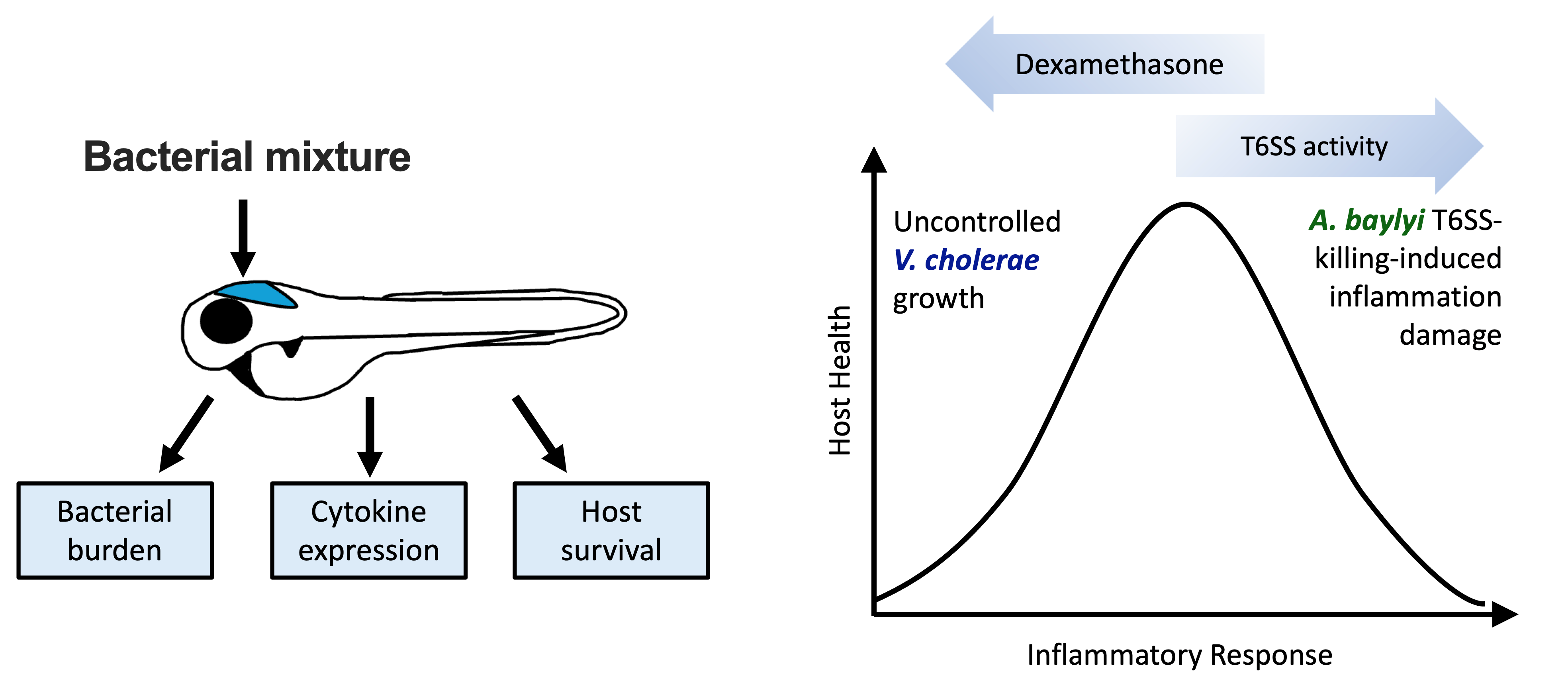
Interbacterial competition plays an important role in the dynamics of microbial communities, however the impact of such competition on host defenses is less clear. In this work, we use a zebrafish model to reductively investigate the host response to distinct forms of bacterial antagonism in well-defined bacterial communities. We looked at bacterial killing mediated by the type VI secretion system (T6SS) and observed that this form of bacterial antagonism resulted in prolonged inflammatory responses and an increase in host death, independent of any specific effector or bacterial species. By contrast, bacterial killing mediated by colicins, despite being significantly more efficient in eliminating sensitive bacteria, induced minimal host responses, resulting in a substantially better host outcome. Altogether, these results provide insight into the roles of different antibacterial systems that pathogens and commensals use inside their host.

Full paper can be accessed here.
Posted by Cyndy Thooi in Publications
ISMB Symposium 2024

ISMB Symposium 2024

Welcome to the ISMB Symposium 2024! The Institute of Structural and Molecular Biology (ISMB) will hold this year’s biennial ISMB Symposium at UCL’s Bloomsbury campus on Tuesday 25th and Wednesday 26th June.

Traditionally, the Symposium gathers eminent guest speakers and our own ISMB scientists to present talks on the core research themes of the Institute in a two-day event. This year’s programme offers an excellent line-up of speakers, introduced by our postdoctoral fellows and phd students. There will be poster and networking sessions.

The Symposium will close with the ISMB Summer Party in Bentham House on 26th June, 17:30-19:30. Please join us in this opportunity to connect with peers, share thoughts about emerging bioscience research, and be a part of the discussions on our scientific future.

We look forward to seeing you all there!

It is free to attend this event however registration is essential. Please click here to register. Deadline for registration is Monday, 17th June.

ISMB Symposium 2024 Programme and Abstracts

Posted by Cyndy Thooi in Uncategorised
Kristine Arnvig’s group published paper in Nucleic Acids Research Journal

Kristine Arnvig’s group published paper in Nucleic Acids Research Journal

Kristine Arnvig’s research group recently published a paper in the Nucleic Acids Journal. Full paper can be accessed here (doi.org/10.1093/nar/gkae338) .

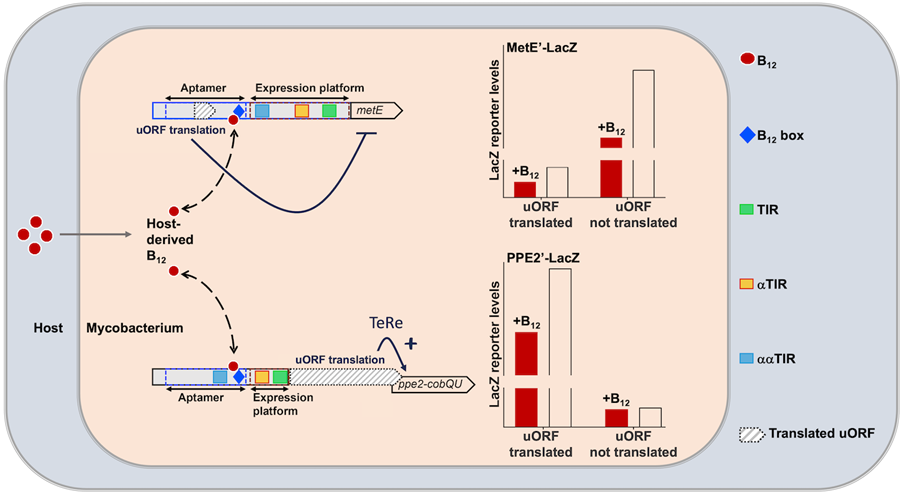
Unexpected complexity of vitamin B12-sensing RNA elements in Mycobacterium tuberculosis.

The bacterium Mycobacterium tuberculosis (Mtb) lacks the ability to produce vitamin B12, yet this co-factor plays a significant role in Mtb’s metabolism and gene regulation. Research conducted by Tine Arnvig’s team reveals an intriguing additional layer of control exerted by vitamin B12-sensing RNA elements, known as riboswitches, over metabolic and virulence genes in this pathogen. Beyond uncovering the B12-dependent inhibition of translation initiation, the team also uncovered two novel translated uORFs, which influence riboswitch regulation. In one instance, they identified a crucial translational link between the uORF and its downstream gene, facilitating translation re-initiation independently of Shine-Dalgarno sequences, alongside stop codon suppression, resulting in the synthesis of a frameshifted fusion protein. Essentially, Mtb demonstrates the capacity to generate similar proteins with differing N-termini, akin to eukaryotic alternative splicing. Lead author Dr. Terry Kipkorir remarks, “[This] represents yet another example of how Mtb breaks the mould in our understanding of gene expression control.’

Posted by Cyndy Thooi in Publications
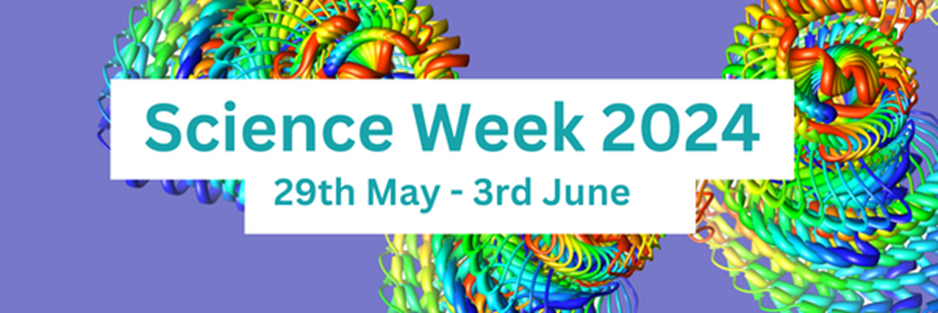
Birkbeck’s Annual Science Week 2024, 29th May – 3rd June

Birkbeck’s Annual Science Week 2024, 29th May – 3rd June

Join us for Birkbeck’s Annual Science Week festival at the Faculty of Science  which runs from Wednesday 29th – Monday 3rd June 2024 in-person and online.

This is not one to be missed, where we will host engaging and interactive evening events, including the annual Rosalind Franklin Lecture and the Andrew and Kathleen Booth Memorial Lecture.

All events will continue into the evening with opportunities to take a tour of our laboratories on the Wednesday and explore poster exhibitions presented by Natural Sciences (Wednesday), Computing and Mathematical Sciences (Thursday) and Psychological Sciences (Friday).

Attendees will be able to meet the speaker, as well as current faculty researchers and students over a drinks reception which will follow each School event.

Book your place, don’t miss out! 

Science week 2024


Posted by Cyndy Thooi in Events
Centre for Doctoral Training in Accelerated Medicines Design & Development

Centre for Doctoral Training in Accelerated Medicines Design & Development

The UCL Faculties of Engineering, Mathematical & Physical Sciences and Life Sciences will lead seven new government-funded Centres for Doctoral Training and be a partner in a further two.

EPSRC has agreed to provide funding for a new Centre for Doctoral Training in Accelerated Medicines Design & Development (AMD&D) (~£7M) with the first student intake scheduled for autumn 2025.

Our CDT will recruit over 50 PhD students to develop the advanced laboratory and computational skills needed to accelerate medicines design and overcome the major obstacles in medicines development. The CDT is a partnership between UCL, the University of Nottingham, and a network of industrial and clinical partners from across the UK pharmaceutical, healthcare and medical technologies sector.

Prof Gareth Williams is the UCL CDT Director and will run the CDT together with UCL Co-Directors Prof Simon Gaisford, Prof Helen Hailes, Professor Rio Torii, Professor Jonathan Knowles and colleagues from Nottingham who are CoIs on the grant.

Read the article on UCL website here.

Posted by Cyndy Thooi in Uncategorised
Preventing Plastic Pollution with Engineering Biology

Preventing Plastic Pollution with Engineering Biology

The Engineering Biology Mission Hubs aim to harness cutting-edge engineering biology research from across the UK to address global challenges from health to the environment. The six hubs will receive up to £12 million each from the UKRI Technology Missions Fund and the Biotechnology and Biological Sciences Research Council (BBSRC).

The P3EB Mission Hub (funded with £12.3M) aims to tackle the urgent environmental challenge of plastic pollution and create new ways for the sustainable deconstruction of synthetic plastics as the UK transitions towards a circular plastics economy. The hub will be led by Professor Andrew Pickford (University of Portsmouth), with support from scientists from seven leading UK institutions, including UCL co-investigators: Professor Helen Hailes (UCL Chemistry), Dr Jack Jeffries (UCL Biochemical Engineering), Professor Mark Miodownik (UCL Mechanical Engineering), Professor Paola Lettieri (UCL Chemical Engineering), Dr Andrea Paulillo (UCL Chemical Engineering), Dr Brooks Paige (UCL Centre for Artificial Intelligence), Professor Christine Orengo (UCL Biosciences).

Read the story here.

Posted by Cyndy Thooi in Uncategorised
“Can We Trust Computers?” Event at the London	Science Museum, 9th May

“Can We Trust Computers?” Event at the London Science Museum, 9th May

Dive into the intriguing world of technological trust with us at the Science Museum’s thought-provoking event, “Can We Trust Computers?”. Join us on Thursday, 9 May 2024, from 18:30 to 19:30, at the IMAX: The Ronson Theatre, for a captivating panel discussion featuring leading experts like Dr. Alessandra Vizzaccaro and Professors Paul Brenner, Tim Palmer, and Peter Coveney, chaired by BBC broadcaster and journalist, Timandra Harkness.

We tackle pressing questions surrounding AI, computer reliability, and the complexities of digital versus analogue worlds. Is it prudent to entrust nuclear weapons to AI? This event promises a deep exploration into these vital questions, framed by real-world implications and expert insights.

Tickets are just £5, and doors open at 18:00. Reserve your spot now for an evening of engaging dialogue on the future of our trust in computers.

For more details and to book your tickets, please visit the Science Museum’s event page: Can We Trust Computers?.


Posted by Cyndy Thooi in Events