
Tuesady 3rd November 1pm room Darwin B05 at UCL
Reading Biomolecular Sequences as Physical Objects:
from Frameshifts to RNA-Protein Interactions
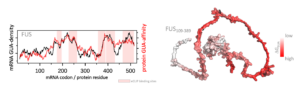
Analysis and comparison of biomolecular sequences are among the key strategies for inferring functional and evolutionary relationships in biology. However, conventional sequence-based approaches account only indirectly for the physicochemical properties reflected in these sequences. In this talk, I will illustrate the potential of treating biomolecular sequences as physical objects using two examples of broad significance. Frameshift mutations typically result in drastically altered protein sequences and are therefore assumed to produce non-functional or even deleterious products. In contrast, we recently showed that protein sequence profiles of hydrophobicity, nucleotide affinity and structural disorder can be remarkably robust to frameshift mutations. This suggests that frameshifting could provide an evolutionary mechanism for generating proteins with vastly different sequences yet similar physicochemical characteristics to their precursors. In the second example, I will discuss our recent finding of a close correspondence between nucleotide-density patterns in mRNAs and nucleotide-affinity patterns in the proteins they encode. These results shed light on the physicochemical forces that contributed to the evolution of the genetic code and suggest that proteins may preferentially interact with their own mRNAs and other compositionally similar RNAs. Finally, I will discuss recent efforts to develop computational approaches for analyzing and comparing biomolecular sequences explicitly as physicochemical objects, with the aim of complementing conventional sequence-based bioinformatics.
Bojan Žagrović
Max Perutz Labs & University of Vienna, Austria