Significance
Abstract


We are proud to announce that Dr. Manoj Saxena, a postdoctoral researcher at the Institute of Structural and Molecular Biology from Prof. Gabriel Waksman’s lab at Birkbeck, University of London, has been selected for the highly competitive Ember programme by Renaissance Philanthropy, powered by its activation partnership with the UK’s Advanced Research and Invention Agency (ARIA).
Dr. Saxena’s project was chosen for its bold and high-impact vision: designing artificial mitochondria using a combination of protein structure prediction, cell-free expression systems, and structural biology. This work sits at the cutting edge of translational bioscience and aligns with Ember’s mission to advance “Big If True” ideas-those with the potential to transform science and society but that fall outside traditional institutional frameworks.
Mitochondrial dysfunction plays a central role in numerous devastating conditions, including stroke, neurodegeneration, aging, and inherited mitochondrial diseases. While mitochondrial transfer is a promising therapeutic strategy currently under global investigation, a reliable and scalable source of functional mitochondria remains a major hurdle. Dr. Saxena’s proposed research aims to address this by developing synthetic models of mitochondria thus creating new platforms for disease modelling and, potentially, a low-cost, bioengineered source of mitochondria for therapeutic use. Prof. Amandine Marechal, an expert in mitochondrial structural biology, will serve as Dr. Saxena’s local ISMB mentor, offering subject-specific guidance.
This ambitious project not only advances the frontier of synthetic biology but also holds real promise for tackling some of the most intractable health challenges of our time. Over next 6 month, through the Ember programme, Dr. Saxena will receive funding, mentoring, and access to a unique network of researchers working on the future of science and innovation in the UK.
We warmly congratulate Dr. Saxena on this achievement and look forward to this important milestone in his career.
A UCL-led team has developed an AI tool to understand antibody assembly in the human body, speeding therapeutic antibody design and revealing new insights into B-cell maturation and immune responses.
Researchers have developed a powerful new artificial intelligence tool, ImmunoMatch, that can predict which antibody components naturally pair together. This advance can significantly accelerate antibody-based drug development and deepen our understanding of how the immune system works.
Antibodies, the proteins our bodies use to detect and neutralize pathogens, are built from two parts: a heavy chain and a light chain. Each B cell produces a unique combination, but only certain pairs form stable, functional antibodies. Until now, deciphering which heavy and light chain sequences naturally pair, or form stable pairs when engineered, has remained a major challenge. Challenging the belief that pairing occurs in a random fashion, the researchers used Artificial Intelligence on millions of paired heavy and light chains to show that their pairing is predictable. The resulting computational tool, ImmunoMatch, offers unprecedented speed and accuracy in identifying correct pairings.
Using thousands of real antibody sequences from healthy human donors, the UCL-led research team trained a machine-learning model to recognise subtle patterns that distinguish true biological heavy–light chain pairs from random combinations. The resulting system can score how likely any two chains are to form a compatible antibody.
The tool performed strongly across training and independent datasets, outperforming traditional approaches that rely on simple gene usage or antibody hypervariable regions. Importantly, it also proved effective on spatial VDJ sequencing data, where heavy and light chains are measured in tissue samples but not captured as pairs. Using ImmunoMatch, researchers could reconstruct probable pairings from these complex datasets, opening new possibilities for studying immune responses within tumours, lymph nodes and other tissues.
The study also revealed a previously unrecognized biological trend: as B cells mature, their antibody chains show increasingly specific and optimized pairing. This suggests that part of the immune system’s refinement process involves fine-tuning which chains work best together.
For the first time, we can computationally infer which heavy and light chains truly belong together. ImmunoMatch paves the way to learn the rules governing how functional antibodies are assembled to overcome different immune challenges. It gives researchers a window into the hidden logic of antibody pairing and we believe it will greatly speed up the discovery and engineering of therapeutic antibodies.”
Corresponding authors Franca Fraternali and Joseph Ng
ImmunoMatch could help scientists more rapidly design therapeutic antibodies, prioritise stable chain combinations and explore the immune system in unprecedented detail using large-scale sequencing datasets.
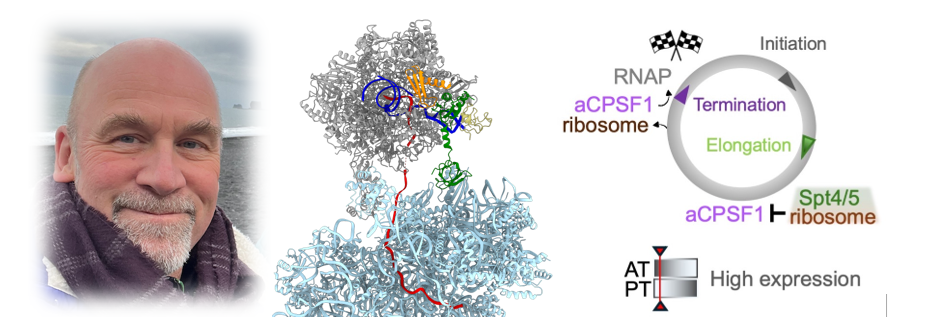
Prof Finn Werner has received an eight-year Wellcome Trust Discovery Award (2025-2033) to support a research program entitled A Holistic View of Gene Expression in Archaea (Figure A). This work will investigate the molecular mechanisms and structural foundations that link RNA polymerase with the pioneering ribosome (B). His laboratory’s genome-scale analyses, which relate dynamic RNA polymerase occupancy to RNA output, have reshaped current understanding of how polymerase movement influences mRNA levels (Blombach, F., et al. Nat Comm 12, 5524 (2021); Smollett, K., et al. Nat Microbiol 2, 17021 (2017). Building on this foundation, the new program will examine transcription within the broader context of translation, allowing us to address fundamental questions about how cells coordinate changes in the transcriptome and proteome and how information flows between the transcription and translation machinery (C) – work that aims to drive a significant advance in the field.
Figure (A) Happy Principle Investigator. (B) S. solfataricus coupled RNAP-ribosome complexes. (C) A previously unrecognised regulatory mechanism in which the ribosome feeds back to RNA polymerase, allowing it to sense and respond to the cell’s metabolic state.
CAS Distinguished Scientist
Prof Finn Werner has been awarded the Chinese Academy of Sciences’ (CAS) Distinguished Scientist Fellowship through the President’s International Fellowship Initiative (PIFI). This fellowship will support deeper collaboration with two leading research groups headed by Profs Jie Li and Chengyuan Wang at the CAS Beijing Institute of Microbiology and the CAS Shanghai Institute of Immunity and Infection. Over the past three years, Finn has worked closely with scientists across China, including at universities in Beijing, Harbin, Qingdao, and Zhengzhou. He views China’s rapidly advancing research landscape and remarkable work ethic as offering valuable opportunities for UK scientists who are looking to engage globally and drive ambitious science forward.
Date: November 24th, 2025
Time: 1300-1400 hrs
Location: AZ Young LT, Anatomy building
Title: ‘The Mechanism and Origin of RNA-Guided Genome Editing in the Ciliate Oxytricha’
Abstract. Oxytricha is a single-celled eukaryote with multiple nuclei and two distinct nuclear genomes. In a feat of natural genome engineering, massive DNA rearrangements rebuild a product somatic genome from a much larger, precursor germline genome, after two cells mate. This process actively destroys nearly all non-coding DNA and rearranges over 225,000 remaining short DNA pieces to build thousands of new gene-sized chromosomes during development. Noncoding RNAs orchestrate the entire process of natural genome editing. In this talk, I will discuss our understanding of the RNA-guided mechanism and evolutionary origin of this extreme case of natural genome editing.
Biography. Laura is a Professor of Biochemistry & Molecular Biophysics and of Biological Sciences at Columbia University. She was previously on the faculty at Princeton from 1994-2016, and a Junior Fellow of the Society of Fellows at Harvard University, where she received her PhD. She has served as President of the Society for Molecular Biology and Evolution in 2017. Awards include an NIH Outstanding Investigator Award, a Guggenheim fellowship, and a Blavatnik award for young scientists. She was elected a Fellow of AAAS for probing the diversity of genetic systems in microbial eukaryotes, including scrambled genes, RNA editing, variant genetic codes, and comparative genomics. https://systemsbiology.columbia.edu/news/qa-with-dr-laura-landweber
To sign up and see the session information, click here.
ARIA funds breakthrough R&D in underexplored areas to catalyse new paths to prosperity for the UK and the world. They empower scientists and engineers to pursue research that is too speculative, too hard, or too interdisciplinary to pursue elsewhere. ARIA’s programmes are shaped and led by their Programme Directors, scientific and technical leaders with deep expertise and a focused, creative vision for how technology can enable a better future.
Key objectives for the event:
> Gain a deeper understanding of ARIA’s work and mission by shifting the conversation from their current efforts to the next frontiers in science and technology.
> Engage directly with ARIA’s specialists in a hands-on session, offering a unique opportunity to brainstorm new ideas and contribute to their future strategy.
> Discover upcoming funding opportunities, learn about their current grantees, and get your questions answered in an open Q&A forum.
Powered by

Prof Jinbiao Ma https://scholar.google.com/citations?user=nFrDcpsAAAAJ&hl=en, from the University of Fudan (Shangai) is vising London this week, and will present his work on “Recognition and mechanisms of Y RNAs and Z RNAs” on Friday Oct 3rd, 2 pm, Anatomy G04 Gavin de Beer LT. This is exciting, novel work at the boundary of Structural biology, RNA biology and Immunology and we thought may be of interest to many.
The Research Department of Structural and Molecular Biology (SMB) is a world leading academic centre that promotes multi-disciplinary research at the interface of structural, computational and chemical biology, pioneering multi-disciplinary approaches aimed to bridge across the scales of biology, and methods to integrate disparate data across the disciplines.
Our research portfolio encompasses several foci, including (i) gene expression & RNA biology, (ii) protein folding, membranes & trafficking, (iii) microbiology & synthetic biology, (iv) metabolism, cancer & biological chemistry and (v) evolution, computational biology with AI & deep learning (https://www.ucl.ac.uk/biosciences/structural-and-molecular-biology/).
We invite Expressions of Interest from early career researchers who wish to be sponsored for external fellowships that will enable them to establish an independent research group at SMB, via a tenure-track like process (https://www.ucl.ac.uk/biosciences/structural-and-molecular-biology/research-fellowships). Such fellowships include: Wellcome Trust Career Development Award, MRC Career Development Award, CRUK Career Development Fellowship, ERC Starting Grant, Royal Society URF, Royal Society Dorothy Hodgkin Fellowship, EPSRC Open Fellowship and similar awards.
Our research fellows make vital contributions to our research department. They bring energy and prestige, novel and original research questions and approaches and new collaborative opportunities, as they widen or deepen our current research portfolio. We run two selection rounds per year. The closing day/time for this round is Monday 13 October 2025, 23:59 BST.
We welcome applications with research focus on Structural and Molecular Biology with particular interest in the areas of Engineering Biology, Integrative Biology – including Omics and Computational Biology – and Microbiology.
Prospective candidates will have an exceptional track record appropriate for their career stage and have to demonstrate their potential to attract competitive fellowships. Following application, selected candidates will be invited to give a research seminar and attend an interview with the Fellowship Panel via an online platform on Tuesday 11 November 2025.
Successful candidates will be invited to visit our Research Department, with opportunities to meet staff, students and current fellows informally and engage in short meetings with selected group leaders. Eligibility: Candidates should confirm their eligibility for specific fellowships schemes and will be required to provide evidence of eligibility to work in the UK before commencing any fellowship offered.
To apply, please submit: 1) a short CV with names of referees; 2) a two-page research vision/draft fellowship application; 3) a cover letter explaining how your proposal is suitable for the fellowship scheme(s) you are interested in, a timeline for application(s), and how you see this research programme fitting into the SMB Research Department. Further information can be found here: https://www.ucl.ac.uk/biosciences/structural-and-molecular-biology/fellowships-application-process
Successful candidates will receive substantial support for the preparation of their Fellowship applications including mock interviews.
Candidates that are successful in securing a fellowship are supported by and embedded into a closely-knit network of colleagues.
They receive laboratory and office space, access to state-of-the-art equipment and expertise and access to research students from a range of 4-year PhD programmes.
In addition, we provide bespoke mentoring and continued professional training. We expect fellows to develop into strong candidates for permanent positions within the department, or elsewhere. In line with this ethos, a large proportion of our past fellows have progressed to permanent positions at SMB.
For informal enquiries, please contact the SMB fellowship coordinators at smb-fellowship@ucl.ac.uk.
As London’s Global University, we know diversity fosters creativity and innovation, and we want our community to represent the diversity of the world’s talent.
We are committed to equality of opportunity, to being fair and inclusive, and to being a place where we all belong.
We therefore particularly encourage applications from candidates who are likely to be underrepresented in UCL’s workforce.
These include people from Black, Asian and ethnic minority backgrounds; disabled people; LGBTQI+ people; and for our Grade 9 and 10 roles, women. Our department holds an Athena SWAN Silver award, in recognition of our commitment to advancing gender equality.
UK bioscience is set to benefit from cutting-edge research tools accelerating advances in health, climate-smart farming, sustainable food and drug discovery.
Thirty-one new technology awards will equip scientists with the infrastructure they need to answer some of the most pressing challenges in biology and beyond.
These include imaging tools that reveal how cells behave in real time, to a mobile platform that tracks carbon movement on farms.
The awards are funded by the Biotechnology and Biological Sciences Research Council (BBSRC) to the tune of £27 million.
They have been made under BBSRC’s ALERT scheme, which is designed to ensure UK bioscience researchers have access to the latest mid-range equipment and technical expertise.
This ranges from funding upgrades and ‘workhorse’ equipment to cutting-edge technologies and lab-to-field platforms.
Dr Amanda Collis, Executive Director for Research Strategy and Programmes at BBSRC, said:
This funding strengthens the UK’s bioscience capability by investing in advanced research equipment, enabling transformative science and fostering collaboration. In doing this, we are supporting world-class infrastructure that drives discovery and innovation essential to deliver real-world impacts and transform lives.
The technologies funded through ALERT will enable transformative outcomes.
A dedicated axolotl research facility at the University of Edinburgh, the only one in the UK, will help researchers investigate how these rare amphibians regenerate limbs, spinal cords and organs.
This could lead to long-term breakthroughs in how we treat injuries and degenerative diseases.
A mobile carbon flux tracking platform at Lancaster University will help researchers measure how carbon moves through UK farmland.
This will provide critical data for improving soil health, land use policy and climate-smart farming practices.
The University of Birmingham will establish a wearable brain-imaging platform to track neural activity from infancy to old age in real-world settings.
By leveraging an emerging quantum technology to overcome the limitations of existing brain imaging methods, this breakthrough could transform our understanding of brain development, social interaction, education and future healthcare.
New high-resolution imaging systems and advanced analytical tools across the UK will enhance our understanding of fundamental biology and immune responses to help tackle cancer, neurological and infectious disease and antimicrobial resistance.
Upgraded nuclear magnetic resonance (NMR) spectroscopy and genomics platforms will support research into crop development, food digestion and the design of future foods with targeted health benefits.
The ALERT programme supports the wider bioscience ecosystem, with nine of the funded projects being led by research technical professionals.
These roles are critical in ensuring complex research infrastructure is expertly maintained, operated and embedded into UK research environments.
Launched in 2013, ALERT has supported more than 300 awards across the UK, providing the bioscience community with access to essential equipment that drives innovation and delivers research with impact.
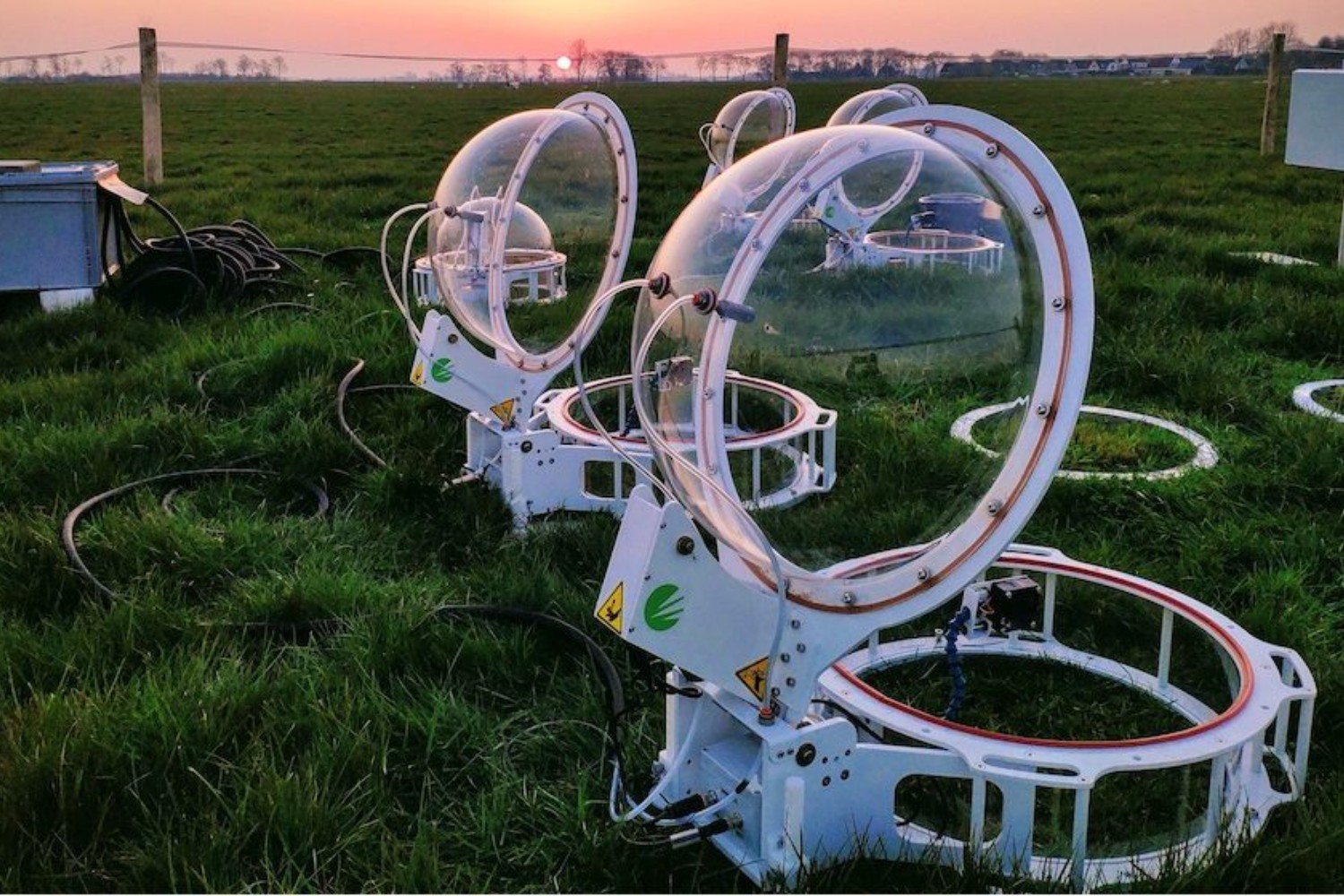
A new £1.5 million Global Meteorological Simulator has been launched at the University of Exeter, creating a groundbreaking way to ‘bring the weather into the lab’.
This state-of-the-art facility can replicate wind, rain, mist and future climate scenarios, enabling researchers to study how crops and pollinators respond to changing conditions.
Early projects include investigating how rice diseases spread in tropical climates and how bees adapt to abrupt weather changes.
Funded by BBSRC’s ALERT 2022 scheme, with additional support from the University of Exeter, the simulator is one of only a few in the world capable of combining multiple weather variables simultaneously.
By enabling experiments that would be impossible in the field, it provides scientists with a powerful tool to tackle urgent challenges in food security, crop resilience and pollination under climate change.
A breakthrough in Parkinson’s disease diagnosis is emerging from The University of Manchester, powered by BBSRC ALERT funding awarded in 2014.
Researchers have developed a simple skin-swab test that can identify Parkinson’s far earlier and more accurately than current methods.
The funding enabled the purchase of cutting-edge mass spectrometry equipment, allowing researchers to analyse chemical changes in sebum, the oily substance produced by skin.
Using high-resolution mass spectrometry, the team uncovered unique molecular signatures linked to Parkinson’s, creating a new diagnostic pathway.
The impact to date has been significant:
In 2022, BBSRC’s ALERT funding enabled the Royal Veterinary College to launch a pioneering organ-on-a-chip facility, now central to their new Centre for Vaccinology and Regenerative Medicine.
This cutting-edge microfluidic technology replicates animal tissue environments, such as barriers and organs, within miniature chips to model how diseases, vaccines and therapies interact in realistic physiological contexts.
The facility supports research on host-pathogen interactions, vaccine development and regenerative medicine.
Further, it significantly reduces reliance on live animal testing, advancing both scientific understanding and the 3Rs principles (replacement, reduction and refinement).
In 2017, BBSRC’s ALERT scheme provided critical support to establish BlueCryo, a high-performance computing cluster at the University of Bristol dedicated to cryo-EM image processing.
This advanced infrastructure significantly accelerated 3D structural biology analysis across multiple research domains.
The real-world impact of this investment became clear in March 2020, during the COVID-19 pandemic, when Bristol researchers leveraged cryo-EM supported by BlueCryo to unravel the structure of the SARS-CoV-2 spike glycoprotein.
This breakthrough revealed a conserved fatty acid binding pocket across deadly coronaviruses, including SARS-CoV, MERS and Omicron strains.
The discovery is now informing the development of pan-coronavirus antivirals, offering therapeutics that could address both current and future outbreaks.
BlueCryo demonstrates how strategic infrastructure funding can enable rapid, globally relevant scientific advances.
Full article here
Biosciences Seminar Speaker: Maciek Wiatrak, Cambridge University
Place: 305, Bedford Way (26)
Date: 02/10/2025
Time: 11.00-12.00
Bacteria have evolved a vast diversity of functions and behaviours which are currently incompletely understood and poorly predicted from DNA sequence alone. To understand the syntax of bacterial evolution and discover genome-to-phenotype relationships, we curated over 1.3 million genomes spanning bacterial phylogenetic space, representing each as an ordered sequence of proteins which collectively were used to train a transformer-based, contextualised protein language model, Bacformer. By pretraining the model to learn genome-wide evolutionary patterns, Bacformer captures the compositional and positional relationships of proteins and can accurately: predict protein-protein interactions, operon structure (which we validated experimentally), and protein function; infer phenotypic traits and identify likely causal genes; and design template synthethic genomes with desired properties. Thus, Bacformer represents a new foundation model for bacterial genomics that provide biological insights and a framework for prediction, inference, and generative tasks.